


Photo by Andrew Neel on Unsplash
The hobby is called “tile hunting” and the core idea fits into one sentence: the world is divided into squares, and you collect squares by visiting them. The more tiles you collect, the better. Because more is always better, right?
That’s where the beauty of tile hunting is: It is a competition where you don’t have to be the fastest or most fit, you don’t need to have a power meter or the most expensive bike. The only things you need are a GPS tracker and a mild tendency towards obsession. And you can choose who you are competing against. It can be the best tile hunters in the world, your own neighbors, or just yourself.
I make a tile game (Wandrio) for a living, so I am about as neutral on this subject as a baker is on bread. Tile hunting has taken me to amazing places, on top of mountains, into swamps, hidden areas, and sometimes into places I didn’t want to go, or should not have gone to.
I will still try to tell this story honestly: where tile hunting came from, what all of the strange words mean, whether it is a global hobby and, if so, which countries play it, and most importantly, why grown adults hug the fences of air force bases?
Let’s start at the beginning. Oddly, it all starts in Scotland in 1891.
A short history of collecting squares
Before GPS, people collected mountains.
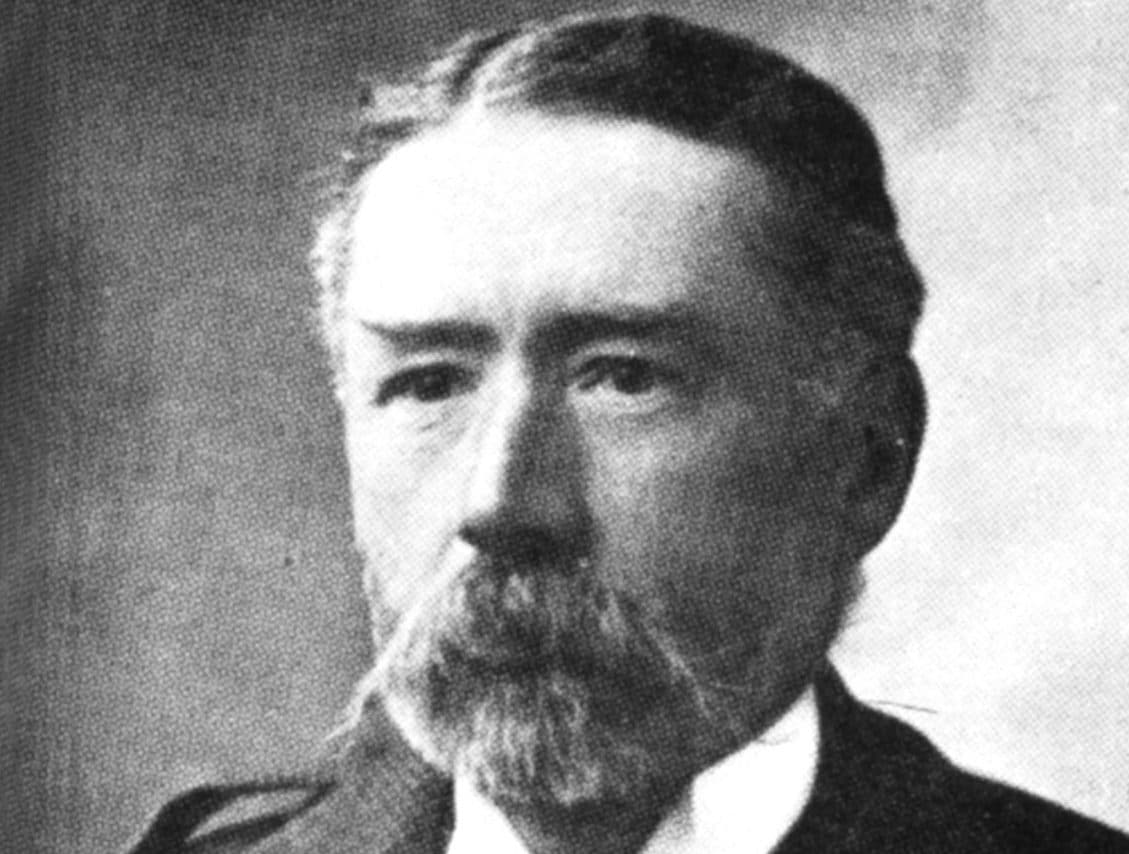
In 1891, a Scotsman, Sir Hugh Munro, published a list of the Scottish mountains over 3,000 feet, in the Scottish Mountaineering Club Journal. For some reason, the British immediately began climbing them one by one and ticking them off. The pastime became known as Munro bagging, and it still goes on.
This is very typical human behavior: give a person a list, and they will want to complete it.
The next step came in February 1996, when American Alex Jarrett walked to the spot in New Hampshire where the 43rd parallel intersects the 72nd meridian. He took some photographs and put them online. This became the Degree Confluence Project, which aims to visit every point where a whole degree of latitude crosses a whole degree of longitude. There are 64,442 of them.
Jarrett said later that he never expected anyone to take it seriously. It had started as a fun game. Thousands of people took it very seriously indeed. Confluence.org lists that there are 9,626 accessible confluences and 6723 successful, primary, confluences have been added to the database.
So the grid collecting had been invented by the 1990s. The squares were just about a hundred kilometres across, which makes an evening ride awkward. For most normal people at least.
The map tile was an accident
In 2004 Steve Coast founded OpenStreetMap, and a year later Google launched Google Maps. Both solved the same technical problem the same way. The map of the world is quite big, and you cannot load it fully into a browser. Or at least you couldn’t in 2004. The innovation was to cut the map into smaller pieces, or images, and only load the pieces needed for a specific area.
Those images are called tiles. When your connection stutters and part of the map turns grey, you’re seeing them.
But you can also zoom in on an online map, so the number of tiles needed per square kilometer also changes.
At each zoom level, the grid gets finer. At level 0, the whole world is one tile. At level 14 there are 16,384 by 16,384 of them, about 268 million.
This is the principle on which tile bagging is built.
Ben Lowe and March 2015
Ben Lowe, a British software developer, wrote the first line of VeloViewer in early 2012. A clubmate had introduced him to Strava, and Lowe wanted to see his own segment placings in one list.
The evening project grew. At 2:20 in the morning on 11 November 2014, Lowe switched on the payment buttons and hoped for two things: that the code would work, and that somebody would pay. Both happened, and within a year he was working on VeloViewer full time.
Lowe wanted something non-competitive, a feature that rewarded something other than speed. The site should be for everyone. He tried a few ideas that did not work. Then he noticed that a zoom level 14 tile is roughly a mile wide. An ordinary ride passes through 20 to 50 of them. The GPS data was already there.
In March 2015, VeloViewer began counting how many different tiles each user had visited. The feature was called Explorer Tiles.
Lowe has said that of everything he has built, this is what he is proudest of. He didn’t need to explain the idea or advertise, users just picked it up and it started to acquire a cult following anyway.
The German nobody can name
Soon after launch, a German user told Lowe he wasn’t collecting just any tiles. He was trying to build the largest possible solid square in which he had visited every single one.
Lowe added the metric and a leaderboard. The max square was born.
The German’s name is lost to history. He invented the sport’s most important measure and got not even a footnote. It is a bit like inventing the goal in football and remaining anonymous.
Things escalated quickly. By the end of 2016, two Belgians, Nils Oudejans and Dominique, had both passed 50×50. On New Year’s Eve 2018, Jon France completed the first 100×100. That is ten thousand squares without a single gap.
The Dutch and the sea
The square has one huge flaw. It stops at the first obstacle. One military site, one lake, or one inlet, and growth ends. Or at least you have start being really creative, like getting a job in the military base. Not everyone are ready to go that far to collect imaginary tiles.
This annoyed the Dutch in particular, because their coastline runs diagonally. Their squares always ended up hitting the North Sea at some point.
Pete Bartlett, a British rider, fixed it. He defined something he first called a clump. Clump is a collection of tiles that are next to each other. But this isn’t enough. Only tiles where you have visited all four of its neighbours count. A clump can be any shape. VeloViewer added the metric in 2017 as the max cluster.
Now the coast no longer mattered. A cluster can go round the sea, wind along valleys and cross national borders.
Copies, mini tiles and hexagons
Success, of course, attracted followers. Stan Ansems launched Statshunters in 2019. It counts the same tiles and the same metrics, for free.
In September 2020, a company called Squadrats was registered in Warsaw, and the service launched in 2021. The Poles did two things differently. They turned tiles openly into a game, with its own vocabulary and a character called Mr Q. And they added zoom level 17 squares, an eighth of the width of a normal tile. They named them squadratinhos.
The mini tile solved a problem tilers had started complaining about. Once every square near home is collected, the next new one is an hour’s drive away. With Squadratinhos there is so much more to collect.
In 2024, Bartlett’s own site, RideEveryTile, added hexagons and every zoom level from zero to seventeen.
November 2024: Strava turns off some taps
The beginning of the whole hobby was built on top of users’ data being aggregated by Strava. Users connected their sports activity trackers into Strava and Strava let developers build applications using that data. It worked well for everyone.
In November 2024, Strava changed its API terms. From then on, other apps could show a user’s Strava data only to that user. The terms took effect on 11 November and were announced four days later.
RideEveryTile lost its global heatmap and its national leaderboards. Bartlett decided not to use the Strava API at all. On his site, you upload ride files by hand.
The lesson was clear to everyone in the business. If your house stands on somebody else’s land, the landlord can change the rules how he wants.
The pros arrive, and so does the phone.
2025 changed the hobby’s visibility. In the professional peloton, Squadrats spread from friend to friend. Benoot heard about it from a training partner; van Aert and Sepp Kuss joined in, and among the French, at least Arnaud Démare and Kévin Vauquelin.
BikeRadar, Cycling Weekly and Škoda’s We Love Cycling published guides. Tile hunting began to be sold as a winter pursuit: with squares waiting, every wet Sunday has a purpose.
At the same time, the game moved from the desktop to the pocket. Squadrats released phone apps in April 2026 and Garmin support in October. For ten years, tiles were something you looked at afterward, at home. Now they light up on the map mid-ride.
Wandrio makes tile hunting accessible for walkers and runners
Oh, I almost forgot to mention what we at Wandrio do. We are avid tile hunters and have used Veloviewer, Statshunters and Squadrats. They are awesome, but we saw one problem with all of them. All the websites are made for cyclists, but tile hunting mechanics should also work for people walking, running, canoeing or horseriding.
Tile hunting should be a real game with teams, friends, rewards, streaks, achievements, leaderboards and a compelling story. That is what we have been working on for the last year. We are not finished, but are getting there slowly and steadily. And people are starting to notice. Most of our new users don’t even have Strava-accounts. They use the built-in recording function in our app and go on exploration and adventuring trips.
We don’t want to fight for the current tile hunting user base. We want to make it bigger and more diverse.
The tile hunting dictionary
To an outsider, tilers sound as if they are speaking in code. “Got three squadratinhos yesterday and the yard grew, but the über is still stuck because of that depot.” The sentence makes perfect sense. Here are the words you need.
Tile
The basic unit. A tile is a square of the web map grid at zoom level 14. VeloViewer calls it an explorer tile; Squadrats calls it a squadrat. All the major services use the same grid, so a tile is the same tile wherever you count it.
A tile is yours once your GPS track has been inside it. Clipping a corner is enough.
Tile size depends on where you are. Earth is a globe and its really hard to put 2D squares on it with fixed size. We tried it, but for some reason it just doesn’t work. The map projection stretches the north, so the squares shrink towards the poles. At the equator, a tile is about 2.4 kilometres wide; in the Netherlands, about 1.5; in Helsinki, about 1.2; and in Oulu, about one.
So a Finn collects more tiles than a Dutchman over the same distance. This is one of the few areas in which our latitude is a sporting advantage.
Squadratinho
The micro tile, a square at zoom level 17. Sixty-four squadratinhos fit into one ordinary tile, eight by eight. In central Europe they are about 200 metres wide, in Finland about 150.
The micro tile is the walker’s and runner’s square, because there are always uncollected ones on your own block. The Dutch call them kaboutertegels, gnome tiles.
Megatile, max square, and übersquadrat
One thing with three names. It is the largest solid square in which you have visited every tile. VeloViewer calls it the max square, Squadrats the übersquadrat, and Wandrio the megatile.
The size is given as the side length. 10×10 means a hundred tiles; 50×50 is already 2,500.
The megatile is the most unforgiving measure in the hobby. Ninety-nine squares out of a hundred count for nothing. One missing tile in the middle, and your square is half the size. This is why a tiler knows every depot, gravel pit and private road in the district.
The current record is 184x184. It stretches from Paris to Brussels and beyond.
Cluster (clump)
The largest connected group of tiles, each with all four side neighbours: north, south, east, and west. Diagonals are not required. Squadrats call it the yard, or the yardinho for mini tiles.
The cluster is more generous than the megatile. It can be any shape, so one impossible square does not stop it. It only leaves a hole.
The largest cluster has more than 50 000 tiles. It belongs to Dead Balladur and reaches from the France to Italy.
Explorer score
VeloViewer’s rarity points. The fewer people have visited a tile, the more it is worth: five points for a tile with at most ten visitors, one point for a tile with more than a hundred.
The metric rewards wilderness and punishes the city park.
The single-ride square
The largest square you can complete in one activity. Eric Nichols, an American, was the first to ride a 9×9, which is 81 squares in one go. The current best is Peter Lundgren’s 25×25. That is 625 squares and 825 kilometres in a single ride, and on the map the route looks as if someone has been mowing a lawn. The rule is harsh: Once you sleep, the ride is over.
Mex and Eddington
These are not tile metrics, but they live in the same sort of head.
Your Eddington number is the largest number E such that you have ridden at least E kilometres on at least E days. So if you have ridden 100 times a 100km distance, your Eddington number is 100. To get to 110 you have to have 110 rides with the length of 110km. The problem with this is that if you have always stopped at 100km, you now have to ride all of those 110 new rides.
Your Mex is the shortest whole-kilometre ride distance you have not yet done. If you have done rides of 1, 2, 3 and 5 kilometres, your Mex is 4. Pekka Tahkola from Oulu, Finland, proposed it, and VeloViewer added it in August 2026.
Which brings us to the most important fact in this hobby’s history. A user invented the max square. A user invented the cluster. A user invented the Mex. The people who run the services have mostly been writing down what the players were already doing. It is a hobby created by the players and the developers have just been counting scores.
Tile hunting around the world
How many tile hunters are there? Nobody knows. No service publishes its users by country, and several publish no numbers at all.
There are scattered pieces of information, though. In spring 2025, VeloViewer said it had 27,000 paying users, a growing share of whom collect tiles. The Squadrats browser extension has 20,000 users, and its Android app, released in April 2026, has been installed about 28,000 times.
So we are talking about tens of thousands of active players. It is a small hobby. It is also surprisingly middle-aged: about four in five visitors to the Squadrats website are men, and the largest age group is 45 to 54.
The best clue to geography is Squadrats’ web traffic. According to Similarweb’s estimate, in August 2026 it split like this:
| Country | Share of visits |
|---|---|
| Poland | 31.6% |
| Germany | 24.2% |
| Belgium | 21.2% |
| France | 9.0% |
| Netherlands | 5.5% |
| All other countries combined | 8.4% |
Five European countries account for more than nine tenths of the traffic. The figures cover one service and are estimates, but the direction is plain. Tile hunting is a European hobby.
The Netherlands: a hobby with its own verb
In the Netherlands, tile hunting is established enough to have its own vocabulary. The verb is tegelen. A practitioner is a tegelaar. The activity is tegeltjes fietsen, cycling for tiles.
The cycling site Het Is Koers has published a beginner’s guide and separately, the ten commandments of tiling. On the Fiets.nl forum, users maintain their own leaderboards by hand, copying the list from the previous post and adding themselves.
In Squadrats’ traffic, the Netherlands is only fifth. The likely reason is that the Dutch have stayed loyal to VeloViewer. Het Is Koers calls it the standard choice of tile-loving Holland.
The country’s best-known tiler is Yorick Dix. His cluster starts in Hamburg and ends on the Mediterranean coast south of Montpellier. It contains more than 31,000 tiles. Dix says he is no longer really competitive, having slipped to seventh in the world.
Belgium: the first big squares
The Belgians were the hobby’s first stars. Nils Oudejans and Dominique led the max square leaderboard as early as 2016. Dominique told VeloViewer about riding pre-planned tile routes once or twice a week before or after work, to avoid the traffic jams.
These days Belgium is also the country of the professionals. Van Aert and Benoot are both Belgian, and the country supplies a fifth of Squadrats’ traffic. That is a lot for a nation of under 12 million people.
Poland and Germany: Squadrats’ home ground
Squadrats is a Warsaw company, so Poland’s first place is no surprise. The service ran for almost six years free of charge and without advertising before a paid Pro tier arrived.
Germany is its second-largest country. One of the hobby’s best-known names is a German, Jürgen Knüpe, who for a long time had the largest cluster: more than 37,000 tiles from the Baltic to the Mediterranean. Now he is in second place. He heard about tiles in 2016 from a fellow entrant in the Transcontinental Race and has since done, by his own account, thousands of rides in search of squares.
France and Britain
France is connected to the hobby’s two biggest numbers. The world’s largest megatile, 158×158, belongs to a rider known as Dead Balladur and covers the ground from Paris to Brussels. In spring 2025, the Squadrats tile count was led by the French adventurer Maximilian Schnell with 103,733.
Britain is where it all started, and tile hunting sits comfortably in the old bagging tradition there. Cycling Weekly wrote about it as early as spring 2020, under the headline Pedalling squares. The piece opens with the then world number one pressed against the fence of an air force base. The British single-ride record is Matthew Winn Smith’s 15×15: 225 squares and 335 kilometres in Kent. By his account the hobby is powerfully addictive for a list-ticker and completely pointless for everybody else.
Finland: the ice will hold
In Finland, tile hunting is a small hobby with a long history. The Fillarifoorumi cycling forum has had a VeloViewer thread since 2017, and people have been comparing squares there ever since. One poster wrote his own tile calculator.
The country’s best-known tiler is Pekka Tahkola, a traffic planner from Oulu. His megatile is 67×67, and his cluster is 11,045 tiles. He is 22nd on VeloViewer’s tile count leaderboard.
Tahkola’s problem is northern Finland’s problem. The squares are small, but countless of them contain nothing: no road, no path, only bog and water. And to the west, theres sea. In summer you cannot reach them.
The solution is to wait for winter. Then you can ride straight across a bog, or kilometers out to sea. The crust softens in the sun, so Tahkola sets off between two and four in the morning.
His worst enemy is the icebreaker. Icebreakers keep the shipping lanes to Oulu’s port open all winter, and between two lanes lies an area you cannot reach without crossing an icebreaker’s track. Tahkola does not recommend even thinking about it.
Why does America collect streets instead?
The United States has more than 300 million people and is home to Strava’s head office. It has very few tile hunters. It isn’t among Squadrats’ top five countries, and every country outside the European top five shares 8.4 per cent of the traffic among them.
The country’s best-known tiler, Eric Nichols of New Hampshire, says he was briefly in the world’s top three. Then keeping up with the Europeans became impossible.
Why? There is no certain answer, but I have two guesses. The first is geography. A megatile requires access to every square. In the Netherlands, nearly every square has a cycle path. In America, a square may contain one motorway, one cattle ranch and a No Trespassing sign.
The second guess is that Americans already have their own version. They do not collect squares; they collect streets. CityStrides, from Massachusetts, tells you what share of your city’s streets you have run. Wandrer.earth does the same for cyclists, in kilometres of road. In a city built on a grid, the street is a natural unit, and you can actually finish a whole town.
More on that next.
The rest of the family
Tile hunting isn’t the only game where you fill in a map by moving. It has two close relatives and one quarrelsome cousin.
Every road
In 2016, an American, Craig Durkin, decided to ride every road in his home city. He wrote a small program that compared his Strava tracks with the road map and told him what was missing.
The program grew into Wandrer. Its rule is simple: you get credit for every road, but only once.
Wandrer shows what percentage of the roads in your town, county or country you have ridden. For the whole planet, Wandrer counts 76 million kilometres of bikeable road. At the start of 2024, its most dedicated user had ridden 123,000 of them. That is under 0.2 per cent.
So this is a game you do not finish. Whether that is comforting or depressing depends on your temperament.
Every street
Runners have the same game on a smaller scale. In 2014, David Papineau of Vancouver started running his city’s streets with a paper map and a pen.
The movement got a face in late 2018. The ultrarunner Rickey Gates ran every street in San Francisco in 46 days. That came to 1,303 miles, about 2,100 kilometres, in a city of 47 square miles.
He called the project Every Single Street, and it drew attention to CityStrides, a service James Chevalier built. During the pandemic years, tens of thousands joined as everyone’s world shrank to their own town.
Territory games
And now the cousin. In territory games, you don’t collect; you own, and what you own can be taken.
PAN Studio in London released Run An Empire, where running around an area claims it. Everyone plays on the same map. A neighbour can run round the same block and take it from you.
The current leader of the genre is INTVL, from Australia, released in February 2024. One estimate puts it at about 50,000 new installs a month. The Squadrats Android app was getting about 2,400 a month in autumn 2026. During 2026, the app stores have filled with similar games whose names recombine the words run, war and conquer.
The difference from tile hunting is fundamental. A tiler’s square is theirs forever, and nobody can take it. In a territory game, nothing is permanent, and your phone tells you when someone has been on your patch.
Wandrio
And then there is us. As I said, I am not neutral.
Wandrio is a tile game on your mobile phone. You have three choices of grid size. 1/1 tiles, 1/16 minitiles and 1/64 microtiles. A tile is yours once your route has passed through it. Your largest solid square is your megatile.
We do three things differently from the traditional tile services:
1. A season lasts a month.
The leaderboard resets at the start of every calendar month. This is our answer to the hobby’s oldest complaint: the home area is full, and the next new square is an hour’s drive away. With us, your own block is an empty map again on the first of every month.
2. You play against and with your friends.
Traditional tile hunting is a solitary business in which your opponent is a world ranking lists, topped by someone with 100,000 squares and visibly more free time. In Wandrio, you can compete against people you actually know.
3. You do not depend on one source of data.
You can record an activity in the app itself, and the tiles light up on the map as you go. You can also bring activities in from Strava, or directly from Garmin and other devices.
Tile hunting works with any exercise that doesn’t involve an engine. Bike, running shoes, skis, kayak or pram- they all count.
And if there is one square you are especially fond of, you can also buy a tile of your own in Wandrio.
You can find Wandrio at the app stores.
The games side by side
| Tile hunting | Roads and streets | Territory games | Wandrio | |
|---|---|---|---|---|
| What you collect | Map squares | Kilometres of road, or streets | Areas enclosed by your route | Map squares |
| Examples | VeloViewer, Squadrats, Statshunters | Wandrer, CityStrides | INTVL, Run An Empire | |
| Can you lose it | No | No | Yes | The season restarts every month |
| Competition | A permanent world ranking | A percentage of an area | A constant turf war | A monthly leaderboard, and friends |
| Is it ever finished | Never | One town at a time | Never | Once a month |
Culture, rules and ethics
Tile hunting has no federation, no referees and no rulebook. It has very precise rules all the same. They are mostly unwritten rules, that people argue about on online forums and Whatsapp discussion groups.
Under your own power
The most important rule is that you earn a square with muscle power. RideEveryTile puts it plainly: the aim is to visit as many tiles as you can using only human power. Usually that means a bike. For the difficult ones, you walk, climb, swim or paddle.
In Het Is Koers’ ten commandments, the same idea appears as an unwritten rule: an activity has to be active, preferably sporting, for its tiles to count.
Impossible squares
Every tiler has that one square. It may be a military area, a port, an airport, a mine or a private forest. The We Love Cycling writer has two mini tiles inside a zoo enclosure that is home to Przewalski’s horses. He notes that they will stay out of reach unless he becomes a zookeeper.
These squares produce the hobby’s best stories.
Jack Peterson, then the world number one, tramped across a field to the fence of an air force base and walked along it, brushing the wire, waiting, as he told Cycling Weekly, for somebody to spot him on the cameras. Another tiler got his first squares in a protected area of Hungary by, in his own words, essentially bribing a local ranger. One Briton baked and offered the results to residents in exchange for access to their land. According to VeloViewer, this hasn’t worked yet.
An old VeloViewer interview series mentions tilers who have bought opera tickets to get into a single square.
Wandrio users have organized days to visit an industrial park, and other open house days with places with unattainable tiles.
Where the line is
The stories are funny, but the hobby’s own position is clear. VeloViewer’s guidance says not to break local laws or enter private property without consent to tick a tile. The Squadrats terms of service note that some squares lie in places you can’t enter lawfully or safely.
Squadrats’ advice for a square inside a closed site is practical. Check whether the place ever holds open days. If not, accept it and grow your square in another direction.
The Degree Confluence Project reached the same conclusion back in the 1990s. You ask permission before entering private land, and visits made without it are removed from the site.
So the line is this: a square is never a reason to break the law or risk your neck. The impossible square is part of the game. That is why the cluster was invented.
Whose square is it anyway?
The fiercest argument in the hobby is not about fences but decimals and gps tracks.
A GPS track is not a line but a string of points. Old devices recorded a point every so often; new ones record one every second. When two points fall on either side of a square, the service has to decide whether the route passed through the corner.
Every service decides slightly differently. One British rider had been told by VeloViewer since 2022 that their square was 36×36. Squadrats said 33×33. They looked into it and concluded that Squadrats had processed two rides more accurately.
RideEveryTile also points out that Strava rounds coordinates to five decimal places. That matters if you were inside a square by less than a metre.
The Dutch commandments cover this as well. If you notice that a service has given you a tile you never visited, the decent thing is to correct it yourself. The honour system, in other words, extends to software bugs.
The tiler’s own solution is simpler. Ride the same route, but this through the middle of the tile.
Why it gets under your skin
The honest answer is that people cannot stand an empty square surrounded by full ones.
A slightly grander answer comes from research. In the MapUncover study, published in 2023, 22 people spent 83 days using a map app in which the map was covered in fog and revealed itself one square at a time as they moved. The researchers started from the idea that following a navigator makes people stop exploring their surroundings.
So the phone has taught us to take the shortest route. A tile game teaches you to take the other one.
This is what the hobby really gives you. Nearly every tiler tells the same story. They connected their account to a service, certain they had covered their home area. The map disagreed. The first empty square was just around the corner.
In 2015, Ben Lowe wanted a metric that rewarded something other than speed. He got one. In tile hunting, a slow ride down three new streets beats a fast lap of the usual loop. And unlike fitness, a megatile does not fade while you are away. It waits, exactly as you left it.
Starting is easy. You do not need a new bike or better fitness. You need a map that shows where you have already been.
After that, it goes the way it went in Scotland in 1891. Somebody has handed you a list.
Happy hunting.
Sources
- Ride Every Tile: A history of cycle tiling
- Ride Every Tile: FAQ
- Ride Every Tile: interview with Eric Nichols
- Strava Community: The Ride that Built VeloViewer
- VeloViewer: Explorer Score and Max Square
- VeloViewer: Explorer Overview
- VeloViewer: Meet the Explorers
- VeloViewer: Chasing Tiles in Arctic Conditions
- VeloViewer: Yorick Dix’s Tiling Adventures
- VeloViewer: Intro to Tile Hunting
- Cycling Weekly: Niche cycling craze hits the WorldTour
- Cycling Weekly: Pedalling squares
- Cycling Weekly: Life in squares
- Cycling Up To Date: Van Aert and Benoot
- We Love Cycling: Advanced strategies
- Het Is Koers: De grote gids voor de beginnende tegelaar
- Het Is Koers: De tien geboden van het tegelen
- Fiets.nl: Squadrats thread
- Fillarifoorumi: VeloViewer thread
- Similarweb: squadrats.com
- AppBrain: Squadrats
- Squadrats: Terms of Service
- Apps for Strava: Squadrats
- road.cc: Strava API changes
- Wandrer: FAQ
- Wandrer: What Kind of Wandrer Are You?
- KQED: Rickey Gates
- Canadian Running: How to run every street in your town
- Wikipedia: CityStrides
- Wikipedia: Degree Confluence Project
- LS: N Global: Run An Empire
- Screensdesign: INTVL
- PistonHeads: VeloViewer thread
- ACM CHI 2023: MapUncover